
We Built a Full Coverage Swimwear Brand… but AI had other plans!
Why Not Naked Swim is choosing authentic imagery, real fit, and intentional AI use in a world of increasingly artificial content
We tried using AI to edit our swimwear content.
But for some reason, without prompting, it gave me plastic surgery. No, seriously.
As both founders of Not Naked Swim have a tech heavy background, we explored how AI might help us with content creation: Smarter edits, faster turnarounds, maybe a few polished visuals while we get protypes made was the idea.. Instead? AI turned me & our suits into something else.
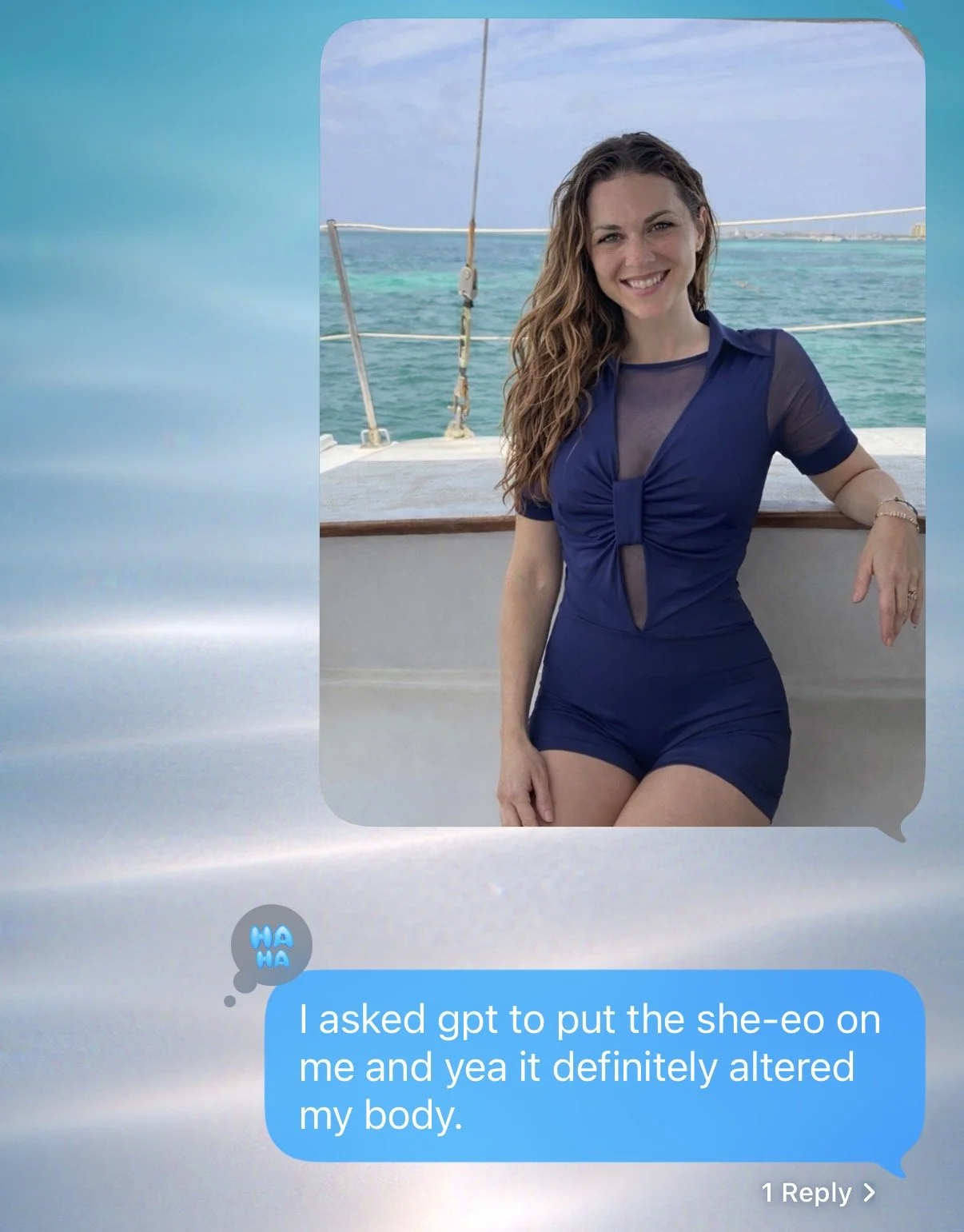
One image transformed me while wearing our She-EO one-piece.
Except… somehow it wasn’t really our swimsuit or me anymore. The details changed. The fit changed. My body changed, for reasons known only to the algorithm gods, the AI decided the “better” version of me should be thinner, smoother, and noticeably more sexualized… apparently, I got some digital enlargements that I definitely did not ask for.
…Then came AI video editing
And this is where things got genuinely funny.
We uploaded clips of our swimsuits, designed intentionally as stylish alternatives to overly revealing swimwear, and no matter the prompt AI kept turning them into bikinis with less fabric, more exposed skin & extra cutouts!
It was as if the algorithm simply could not compute that yes, we actually meant to design fashionable full coverage swimwear. Because not every woman wants the tiniest bikini possible.
Some women want sun-safe swimwear that still feels elevated and stylish while covering their skin. Some want UV protection swimwear because they burn easily, have fair skin, struggle with melanoma or hyperpigmentation, or simply don’t want to spend all day reapplying sunscreen. Others just want to feel confident at a family pool party, resort vacation, or work retreat without feeling overexposed.
That middle ground is surprisingly underserved. Apparently underserved by AI, too.
Enjoy our Not Naked Swimwear’s AI generated video fail, and yes she walks on water!
So why does AI Keep Making Women’s Swimwear Smaller?
The answer is actually pretty interesting.
In simple terms, AI learns from patterns in the data it’s trained on. And the internet has spent years rewarding a very specific version of women’s swimwear: smaller silhouettes, heavier editing, perfect lighting, hyper-polished bodies, & more skin… way more skin!
AI models are trained on enormous amounts of internet imagery, so when they edit or generate content, they often predict toward what they’ve seen most frequently before. In other words: AI isn’t necessarily making a judgment, rather it’s making a probability guess. And statistically, online swimwear content has often skewed toward what gets the most engagement which tends to be highly stylized, highly edited, and yes more revealing teeny-tiny bikinis. So when we uploaded intentionally full coverage swimsuits, the model kept nudging things toward what it considered more “normal” swimwear.
Apparently, the algorithm had never met women who want more coverage and style at the same time. Which, ironically, is the whole reason we started Not Naked Swim. We wanted something that felt modern, elevated, and genuinely wearable. Something between too exposed & too frumpy, a stylish middle ground.
Even when my co-founder was originally trying to create designs and see what they looked like in the world, every time she imported sketches into the various generative tools, it made the shorts shorter and the tops more revealing.. even with the new direct style reference, it still falls back on what it was trained on.
We quickly discovered the limits of what exists and the importance of what we are creating… because women deserve more options than “barely there bikinis” or rash guards.
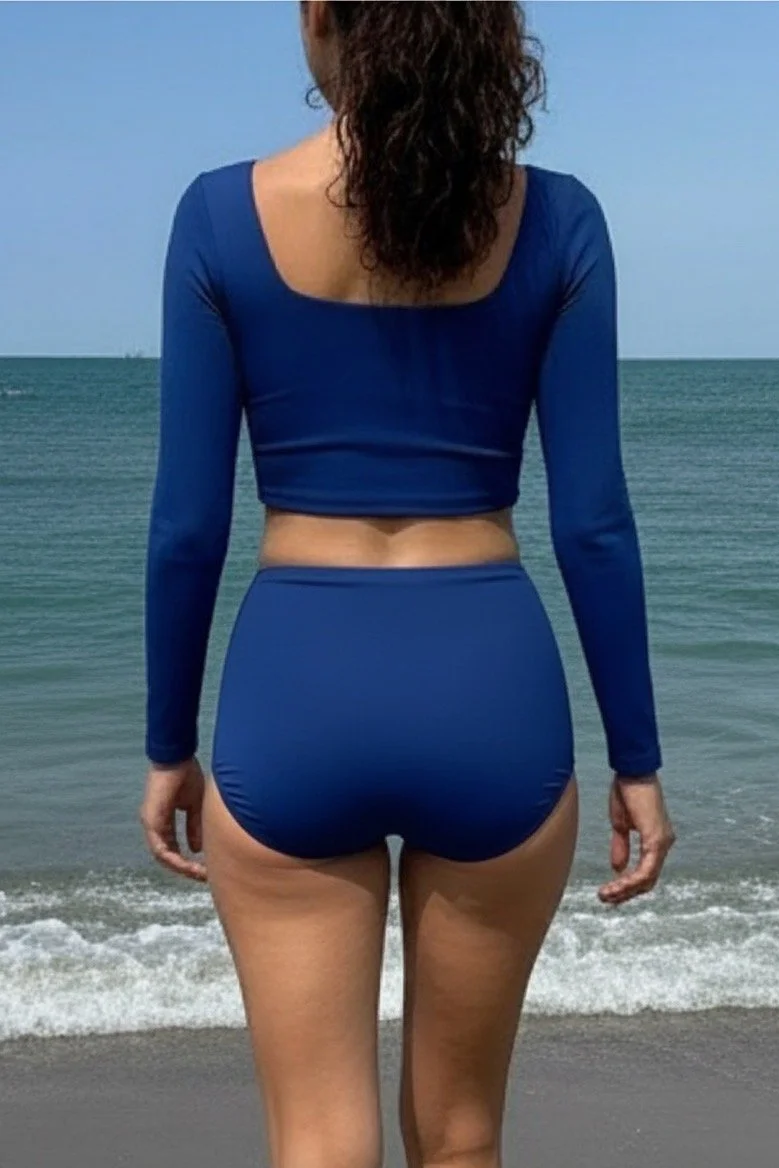
Original AI created image with unprompted changes to the design to “full coverage” swim bottoms
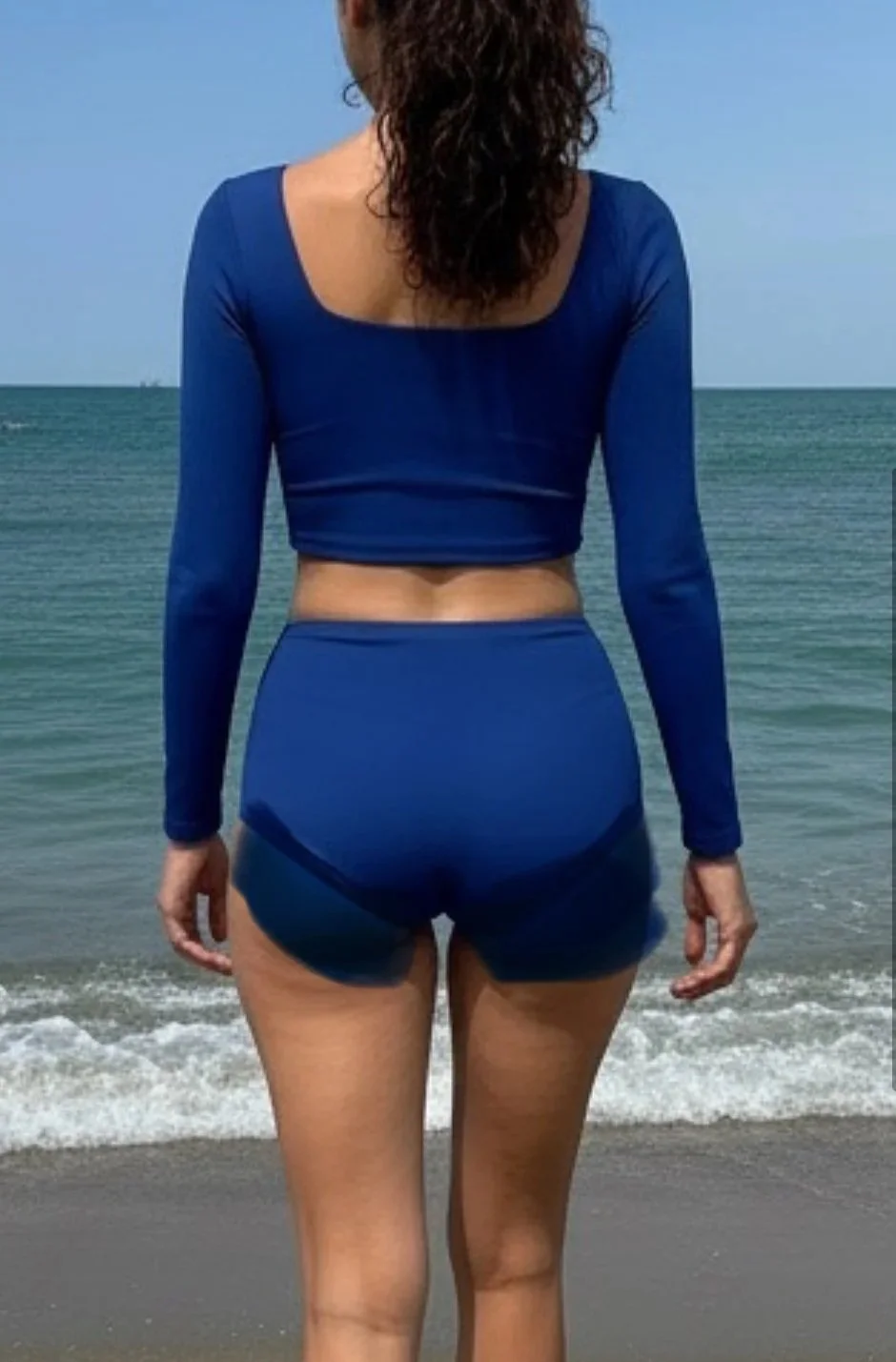
Design refinements with prompting on AI created image to match the original intended human-drawn designs for full coverage bottoms
The Bigger Problem With AI Fashion Content
The funny AI fails made us laugh. But they also highlighted something bigger. AI tends to optimize toward what already performs online. And in fashion, especially women’s fashion, that means highly edited, increasingly unrealistic imagery.
But when you’re building a brand around confidence, comfort, and authenticity, that becomes a problem. For us, swimwear is personal. Fit matters. Coverage matters. Trust matters.
If someone orders a full coverage swimsuit for women expecting one thing and receives something different because imagery was altered, that disconnect matters too.
At Not Naked Swim, we want women to know exactly what they’re getting: Real coverage. Real fit. Real women. Real products. Not an AI-enhanced fantasy version!
Even Pinterest Started Feeling… Fake AF.
Ironically, when setting up our social channels, Pinterest initially felt like such a natural fit. Swimwear inspiration. Vacation mood boards. Beach aesthetics. Sun-safe fashion. Perfect…
Except we quickly found ourselves mentally exhausted from all the fake AI content!
Every scroll felt flooded with increasingly polished, uncanny, AI-generated perfection. Perfect beaches. Perfect bodies. Perfect lighting. And honestly? We started using it less!
That said, we did discover one feature that helps reduce AI-generated content in your feed, and we shared a quick TikTok showing exactly how to use it. (Check it out)
We’re Not Anti-AI, We’re Pro-Intentionality
To be clear: We’re not anti-AI. We both work in tech. We understand how powerful these tools can be, and we absolutely believe they have a place in business.
But for us, the garment industry is one place where authenticity matters more than optimization. Especially when fit, confidence, body image, and trust are part of the product itself.
So yes, we’ll use AI thoughtfully behind-the-scenes.
But when it comes to showing women what our swimwear actually looks like? We’re keeping it real.
Because confidence shouldn’t require a filter.
What do you think? Are brands leaning too hard into AI-generated marketing, or is there a middle ground between innovation and authenticity?